
Item specifics
- Condition
- Very GoodA book that does not look new and has been read but is in excellent condition. No obvious damage to the cover, with the dust jacket (if applicable) included for hard covers. No missing or damaged pages, no creases or tears, and no underlining/highlighting of text or writing in the margins. May be very minimal identifying marks on the inside cover. Very minimal wear and tear. See the seller’s listing for full details and description of any imperfections. See all condition definitionsopens in a new window or tab
- Seller Notes
- Special Attributes
- EX-LIBRARY
- Publication Name
- Harvard University Press
- ISBN
- 9780674725164
- Book Title
- Do Muslim Women Need Saving?
- Publisher
- Harvard University Press
- Item Length
- 8.5 in
- Publication Year
- 2013
- Format
- Hardcover
- Language
- English
- Item Height
- 1.1 in
- Author
- Lila Abu-Lughod
- Genre
- Religion, Political Science, Social Science
- Topic
- Civil Rights, Islam / General, Women’s Studies, Anthropology / General
- Item Weight
- 19.5 Oz
- Item Width
- 5.8 in
- Number of Pages
- 336 Pages
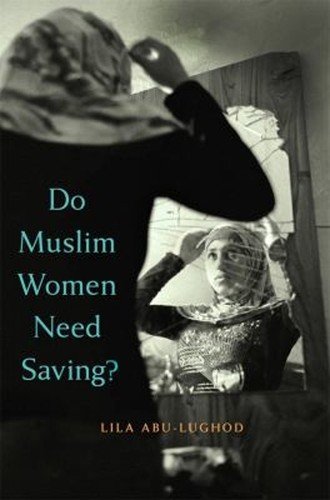
Do Muslim Women Need Saving? Hardcover Lila Abu-Lughod
About this product
Product Identifiers
Publisher
Harvard University Press
ISBN-10
0674725166
ISBN-13
9780674725164
eBay Product ID (ePID)
166494513
Product Key Features
Book Title
Do Muslim Women Need Saving?
Number of Pages
336 Pages
Language
English
Topic
Civil Rights, Islam / General, Women’s Studies, Anthropology / General
Publication Year
2013
Genre
Religion, Political Science, Social Science
Format
Hardcover
Dimensions
Item Height
1.1 in
Item Weight
19.5 Oz
Item Length
8.5 in
Item Width
5.8 in
Additional Product Features
Intended Audience
Trade
LCCN
2013-005846
Reviews
Lila Abu-Lughod lays bare the many factors that can collude to produce an unhappy woman in a Muslim society: abusive father, distant husband, bad personal decisions, and restrictive codes of conduct, yes, but also poverty, neoliberalism, politicized NGOs, war, and occupation. Her book tells larger, transnational stories, bringing together activists, publishers, and women from all over the world., [A] beautiful book’e¦ It is a riveting account by an academic who has spent many years observing women in the Middle East and the West, and adeptly wears several hats as an anthropologist and professor in women’e(tm)s studies. Abu-Lughod is a great listener and a sharp observer of everyday life. She understands the struggles, joys and jealousies of Middle Eastern women and has an ear for the stories that do not make headlines. Refusing to treat Muslim women as a category, she focuses on nuances and complexities. Where others see an undifferentiated mass of individuals, she sees real women with real stories’e¦ There are Islams, just like there are Judaisms, Christianities and Hinduisms. We need to make the word plural to understand the wide variety of practices and power relations. And Lila Abu-Lughod’e(tm)s Do Muslim Women Need Saving? does precisely that with its captivating approach., Tracing connections from human rights groups and international feminist NGOs, to philosophy and anthropology, to best-selling memoirs of Muslim women and titillating pulp fiction accounts of Muslim women’s suffering, Abu-Lughod argues that the West’s perception of Muslim women as creatures in need of rescue is shaped by a confluence of powerful forces. Incisively argued and often sharply critical, Abu-Lughod’s book–which will surely spark debate–is essential reading for anyone interested in women’s rights in the Muslim world., Saving Muslim women is now a global undertaking in which the participants are both Muslim and non-Muslim. Lila Abu-Lughod ‘e(tm)s book is a critical reflection on this mushrooming industry, and its representatives, representations and bureaucracy’e¦ Abu-Lughod succeeds in’e¦exposing several stubbornly persistent myths. She critically assesses the vast number of sensational representations of women, written by Muslims and others, about the general repression in a so-called IslamLand. She follows the trail of global feminism in the extensive bureaucracy, institutions and non-governmental organizations that have emerged since the 1990s, all claiming to save Muslim women’e¦ Her focus on analyzing how individual Muslim women experience freedom, rights and constraints brings a much-needed perspective’e¦ She offers a panoramic view of women’e(tm)s multiple experiences in their own contexts, thereby dismissing sweeping generalizations about these women being a homogeneous oppressed mass. She urges us to look at contexts shaped by global politics, international capital and modern state institutions that all contribute to changing landscapes of family and community. Abu-Lughod reminds us that rights may be universal but above all they are projects bounded by political contexts, institutions and language’e¦This book is destined to unsettle the convictions of those concerned with saving Muslim women. Many will find it shocking for its uncompromising critique of recent moral crusades, while careful readers will doubtless find in it enough ammunition to deconstruct projects that may seem worth pursuing, but ultimately are not as focused on improving women’e(tm)s lives in faraway places as they first appear. Abu-Lughod dissolves geographical boundaries, exposes the limits of global morality, and deconstructs the international power context that allows Muslim women to remain that distant voiceless other, awaiting intervention. It invites us to think not only about dominant representations of Muslim women in images and words, but also about our own engagement with the other, which has always taken place in an unequal context., In accessible, lucid prose, Abu-Lughod explains how sensationalized memoirs, or ‘pulp nonfiction,’ have perpetuated stereotypes and made Muslim women a symbol of an alien culture. The author dispassionately points out the hypocrisy of colonial feminism, and how more often than not, there is a clear political agenda behind the liberation of the ‘women of cover’ and how the role of the U.S. is often overlooked. The women presented here see their Islamic faith as a source of strength to fight injustice, not the cause of it. They’re not asking to be rescued from their religion, the author contends, but from the discriminatory legal system, poverty, outdated patriarchal family traditions, and border controls that continue to inhibit their freedom. While offering no easy solution, the author recommends observation over moral crusades, stating: ‘Anyone seriously interested in Muslim women’s rights must follow them as they move.’ This book is an excellent place to begin., There is no one better qualified than Lila Abu-Lughod to take on difficult questions about Muslim women and their portrayal in the global media. Her answers shake up some fundamental assumptions held by liberals and conservatives alike and raise new questions. This book persuades us to consider new and more productive ways of thinking and acting., In this passionate, sharply articulated, and engaging argument, Lila Abu-Lughod describes how Islam has been transformed into a homogenized geography ‘somewhere out there’ and how its women, different as they are diverse, have become the excuse for political and military interventions. In place of the simplistic arguments that are bandied about on the global stage, this book reminds us to ask more important questions: who are the saviors of Muslim women and how did they acquire the right to be the saviors? Every thinking individual should read this book., This is a provocative and astute challenge to the received wisdom of our time that Muslim women need to be saved by the liberated West. Abu-Lughod not only offers an insightful critique of the remedies offered to combat violence against Muslim women but also helps us see their lives differently. We are forced to confront the shared humanity between ‘us’ and ‘them’ that is both unsettling and instructive. No one interested in questions of gender, Islam, and human rights can choose to ignore this book., In accessible, lucid prose, Abu-Lughod explains how sensationalized memoirs, or ‘e~pulp nonfiction,’e(tm) have perpetuated stereotypes and made Muslim women a symbol of an alien culture. The author dispassionately points out the hypocrisy of colonial feminism, and how more often than not, there is a clear political agenda behind the liberation of the ‘e~women of cover’e(tm) and how the role of the U.S. is often overlooked. The women presented here see their Islamic faith as a source of strength to fight injustice, not the cause of it. They’e(tm)re not asking to be rescued from their religion, the author contends, but from the discriminatory legal system, poverty, outdated patriarchal family traditions, and border controls that continue to inhibit their freedom. While offering no easy solution, the author recommends observation over moral crusades, stating: ‘e~Anyone seriously interested in Muslim women’e(tm)s rights must follow them as they move.’e(tm) This book is an excellent place to begin.
Dewey Edition
23
Dewey Decimal
305.48/697
Synopsis
Frequent reports of honor killings, disfigurement, and sensational abuse have given rise to a consensus in the West, a message propagated by human rights groups and the media: Muslim women need to be rescued. Lila Abu-Lughod boldly challenges this conclusion. An anthropologist who has been writing about Arab women for thirty years, she delves into the predicaments of Muslim women today, questioning whether generalizations about Islamic culture can explain the hardships these women face and asking what motivates particular individuals and institutions to promote their rights. In recent years Abu-Lughod has struggled to reconcile the popular image of women victimized by Islam with the complex women she has known through her research in various communities in the Muslim world. Here, she renders that divide vivid by presenting detailed vignettes of the lives of ordinary Muslim women, and showing that the problem of gender inequality cannot be laid at the feet of religion alone. Poverty and authoritarianism–conditions not unique to the Islamic world, and produced out of global interconnections that implicate the West–are often more decisive. The standard Western vocabulary of oppression, choice, and freedom is too blunt to describe these women’s lives. Do Muslim Women Need Saving? is an indictment of a mindset that has justified all manner of foreign interference, including military invasion, in the name of rescuing women from Islam–as well as a moving portrait of women’s actual experiences, and of the contingencies with which they live., Do Muslim Women Need Saving? is an indictment of a mindset that has justified all manner of foreign interference, including military invasion, in the name of rescuing women from Islam. It offers a detailed, moving portrait of the actual experiences of ordinary Muslim women, and of the contingencies with which they live.
LC Classification Number
HQ1170.A346 2013
Price : 8.23
Ends on : N/A
View on eBay