Item specifics
- Condition
- ISBN-10
- 0307268225
- Publication Name
- Knopf
- Type
- Hardcover
- ISBN
- 9780307268228
- Book Title
- Thomas Jefferson’s Qur’an : Islam and the Founders
- Publisher
- Knopf Doubleday Publishing Group
- Item Length
- 9.6 in
- Publication Year
- 2013
- Format
- Hardcover
- Language
- English
- Illustrator
- Yes
- Item Height
- 1.3 in
- Author
- Denise A. Spellberg
- Genre
- Religion, Political Science, Social Science, Biography & Autobiography, History
- Topic
- Islamic Studies, Islam / History, Constitutions, Civil Rights, Presidents & Heads of State, United States / General, Political Freedom, Religion, Politics & State
- Item Weight
- 26.5 Oz
- Item Width
- 6.6 in
- Number of Pages
- 416 Pages
- Country of Origin
- United States
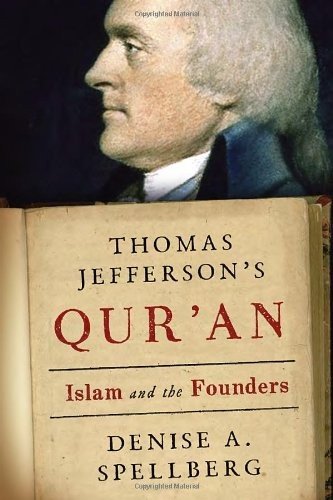
THOMAS JEFFERSON’S QUR’AN: ISLAM AND THE FOUNDERS By Denise A. Spellberg **NEW**
About this product
Product Identifiers
Publisher
Knopf Doubleday Publishing Group
ISBN-10
0307268225
ISBN-13
9780307268228
eBay Product ID (ePID)
159873780
Product Key Features
Book Title
Thomas Jefferson’s Qur’an : Islam and the Founders
Number of Pages
416 Pages
Language
English
Publication Year
2013
Topic
Islamic Studies, Islam / History, Constitutions, Civil Rights, Presidents & Heads of State, United States / General, Political Freedom, Religion, Politics & State
Illustrator
Yes
Genre
Religion, Political Science, Social Science, Biography & Autobiography, History
Format
Hardcover
Dimensions
Item Height
1.3 in
Item Weight
26.5 Oz
Item Length
9.6 in
Item Width
6.6 in
Additional Product Features
Intended Audience
Trade
Reviews
Praise for Thomas Jefferson’s Qur’an “Denise Spellberg has done a great thing here by recovering the spirit and the substance of Thomas Jefferson’s vision of true religious liberty. For Jefferson and many of his Founding colleagues, the shift from ‘toleration’ to ‘liberty’ marked a profound change, extending protection and, yes, sanctuary to those of any faith whatsoever, including those of no faith. By focusing on the Jeffersonian understanding of Islam, Spellberg tells a fresh story in engaging fashion and shows us that the past, while surely not perfect, still has much to teach us all these years distant.” –Jon Meacham, winner of the Pulitzer prize and author of Thomas Jefferson: The Art of Power “An impressive and timely book, explaining in detail the universalism of Jefferson’s religious toleration, his contemplation of full citizenship and equality not only for Jews and Catholics but for Muslims as well, while still accepting the traditional view of the ‘errors’ of Islam. Denise Spellberg documents in detail ‘where, when, and how Muslims were first included in American ideals.’ An exploration of the extent of the Founders’ pluralism, the book is not only a notable addition to our understanding of Jefferson but a significant comment on the world today.” –Bernard Bailyn. Two-time winner of the Pulitzer prize and author of The Barbarous Years “In this ground breaking book, Spellberg explores how America’s founding fathers intended religious tolerance as a key American ideal not only for various Protestant groups, but also for its future Muslim citizens. As her book explores how tolerant attitudes towards Catholics, Jews, and Muslims led key early American thinkers to consider religious freedom in the widest possible terms, it offers a crucial corrective to those who today resist the nation’s inherent blueprint for religious pluralism. In tracing the transatlantic development of these ideas, Spellberg has laid critical groundwork for those interested in European and American perceptions of Islam and religious diversity at the time of the founding of the United States.” –Ali Asani, Professor and Director of the Prince Alwaleed bin Talal Islamic Studies Program at Harvard University, Praise for Thomas Jefferson’s Qur’an “Wonderful…Spellberg provides valuable historical context for the struggle for religious tolerance and inclusion. In itself, her book constitutes a step toward inclusiveness in the ongoing construction of American history.” –Jonathan P. Berkey, San Francisco Chronicle ” Thomas Jefferson’s Qur’an examines the intersection during the nation’s founding era of two contentious themes in culture wars–the relationship of Islam to America, and the proper relationship between church and state. The story that it tells ought to be familiar to most Americans, and is familiar to historians of the nation’s founding. And yet, by using Islam as her book’s touchstone, Spellberg brings illuminating freshness to an oft-told tale…Compelling, formidably documented…Spellberg’s book is essential reading in these troubled times.” –R.B. Bernstein, The Daily Beast “Denise Spellberg has done a great thing here by recovering the spirit and the substance of Thomas Jefferson’s vision of true religious liberty. For Jefferson and many of his Founding colleagues, the shift from ‘toleration’ to ‘liberty’ marked a profound change, extending protection and, yes, sanctuary to those of any faith whatsoever, including those of no faith. By focusing on the Jeffersonian understanding of Islam, Spellberg tells a fresh story in engaging fashion and shows us that the past, while surely not perfect, still has much to teach us all these years distant.” –Jon Meacham, winner of the Pulitzer prize and author of Thomas Jefferson: The Art of Power “An impressive and timely book, explaining in detail the universalism of Jefferson’s religious toleration, his contemplation of full citizenship and equality not only for Jews and Catholics but for Muslims as well, while still accepting the traditional view of the ‘errors’ of Islam. Denise Spellberg documents in detail ‘where, when, and how Muslims were first included in American ideals.’ An exploration of the extent of the Founders’ pluralism, the book is not only a notable addition to our understanding of Jefferson but a significant comment on the world today.” –Bernard Bailyn. Two-time winner of the Pulitzer prize and author of The Barbarous Years “In this ground breaking book, Spellberg explores how America’s founding fathers intended religious tolerance as a key American ideal not only for various Protestant groups, but also for its future Muslim citizens. As her book explores how tolerant attitudes towards Catholics, Jews, and Muslims led key early American thinkers to consider religious freedom in the widest possible terms, it offers a crucial corrective to those who today resist the nation’s inherent blueprint for religious pluralism. In tracing the transatlantic development of these ideas, Spellberg has laid critical groundwork for those interested in European and American perceptions of Islam and religious diversity at the time of the founding of the United States.” –Ali Asani, Professor and Director of the Prince Alwaleed bin Talal Islamic Studies Program at Harvard University, Praise for Thomas Jefferson’s Qur’an ” Thomas Jefferson’s Qur’an examines the intersection during the nation’s founding era of two contentious themes in culture wars–the relationship of Islam to America, and the proper relationship between church and state. The story that it tells ought to be familiar to most Americans, and is familiar to historians of the nation’s founding. And yet, by using Islam as her book’s touchstone, Spellberg brings illuminating freshness to an oft-told tale…Compelling, formidably documented…Spellberg’s book is essential reading in these troubled times.” –R.B. Bernstein, The Daily Beast “Denise Spellberg has done a great thing here by recovering the spirit and the substance of Thomas Jefferson’s vision of true religious liberty. For Jefferson and many of his Founding colleagues, the shift from ‘toleration’ to ‘liberty’ marked a profound change, extending protection and, yes, sanctuary to those of any faith whatsoever, including those of no faith. By focusing on the Jeffersonian understanding of Islam, Spellberg tells a fresh story in engaging fashion and shows us that the past, while surely not perfect, still has much to teach us all these years distant.” –Jon Meacham, winner of the Pulitzer prize and author of Thomas Jefferson: The Art of Power “An impressive and timely book, explaining in detail the universalism of Jefferson’s religious toleration, his contemplation of full citizenship and equality not only for Jews and Catholics but for Muslims as well, while still accepting the traditional view of the ‘errors’ of Islam. Denise Spellberg documents in detail ‘where, when, and how Muslims were first included in American ideals.’ An exploration of the extent of the Founders’ pluralism, the book is not only a notable addition to our understanding of Jefferson but a significant comment on the world today.” –Bernard Bailyn. Two-time winner of the Pulitzer prize and author of The Barbarous Years “In this ground breaking book, Spellberg explores how America’s founding fathers intended religious tolerance as a key American ideal not only for various Protestant groups, but also for its future Muslim citizens. As her book explores how tolerant attitudes towards Catholics, Jews, and Muslims led key early American thinkers to consider religious freedom in the widest possible terms, it offers a crucial corrective to those who today resist the nation’s inherent blueprint for religious pluralism. In tracing the transatlantic development of these ideas, Spellberg has laid critical groundwork for those interested in European and American perceptions of Islam and religious diversity at the time of the founding of the United States.” –Ali Asani, Professor and Director of the Prince Alwaleed bin Talal Islamic Studies Program at Harvard University
Dewey Edition
23
Dewey Decimal
973.4/6092
Synopsis
In this original and illuminating book, Denise A. Spellberg reveals a little-known but crucial dimension of the story of American religious freedom–a drama in which Islam played a surprising role. In 1765, eleven years before composing the Declaration of Independence, Thomas Jefferson bought a Qur’an. This marked only the beginning of his lifelong interest in Islam, and he would go on to acquire numerous books on Middle Eastern languages, history, and travel, taking extensive notes on Islam as it relates to English common law. Jefferson sought to understand Islam notwithstanding his personal disdain for the faith, a sentiment prevalent among his Protestant contemporaries in England and America. But unlike most of them, by 1776 Jefferson could imagine Muslims as future citizens of his new country. Based on groundbreaking research, Spellberg compellingly recounts how a handful of the Founders, Jefferson foremost among them, drew upon Enlightenment ideas about the toleration of Muslims (then deemed the ultimate outsiders in Western society) to fashion out of what had been a purely speculative debate a practical foundation for governance in America. In this way, Muslims, who were not even known to exist in the colonies, became the imaginary outer limit for an unprecedented, uniquely American religious pluralism that would also encompass the actual despised minorities of Jews and Catholics. The rancorous public dispute concerning the inclusion of Muslims, for which principle Jefferson’s political foes would vilify him to the end of his life, thus became decisive in the Founders’ ultimate judgment not to establish a Protestant nation, as they might well have done. As popular suspicions about Islam persist and the numbers of American Muslim citizenry grow into the millions, Spellberg’s revelatory understanding of this radical notion of the Founders is more urgent than ever. Thomas Jefferson’s Qur’an is a timely look at the ideals that existed at our country’s creation, and their fundamental implications for our present and future., In this original and illuminating book, Denise A. Spellberg reveals a little-known but crucial dimension of the story of American religious freedom a drama in which Islam played a surprising role. In 1765, eleven years before composing the Declaration of Independence, Thomas Jefferson bought a Qur an. This marked only the beginning of his lifelong interest in Islam, and he would go on to acquire numerous books on Middle Eastern languages, history, and travel, taking extensive notes on Islam as it relates to English common law. Jefferson sought to understand Islam notwithstanding his personal disdain for the faith, a sentiment prevalent among his Protestant contemporaries in England and America. But unlike most of them, by 1776 Jefferson could imagine Muslims as future citizens of his new country. Based on groundbreaking research, Spellberg compellingly recounts how a handful of the Founders, Jefferson foremost among them, drew upon Enlightenment ideas about the toleration of Muslims (then deemed the ultimate outsiders in Western society) to fashion out of what had been a purely speculative debate a practical foundation for governance in America. In this way, Muslims, who were not even known to exist in the colonies, became the imaginary outer limit for an unprecedented, uniquely American religious pluralism that would also encompass the actual despised minorities of Jews and Catholics. The rancorous public dispute concerning the inclusion of Muslims, for which principle Jefferson s political foes would vilify him to the end of his life, thus became decisive in the Founders ultimate judgment not to establish a Protestant nation, as they might well have done. As popular suspicions about Islam persist and the numbers of American Muslim citizenry grow into the millions, Spellberg s revelatory understanding of this radical notion of the Founders is more urgent than ever. “Thomas Jefferson s Qur an” is a timely look at the ideals that existed at our country s creation, and their fundamental implications for our present and future.”
LC Classification Number
E332.2.S65 2013
Price : 64.49
Ends on : N/A
View on eBay